
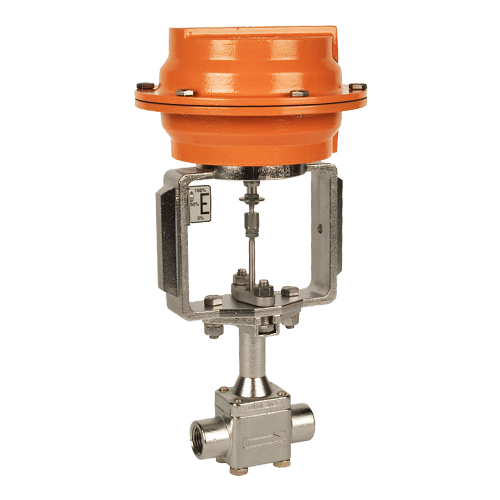
Control Valves
Control Valves are precision‑engineered devices designed to regulate flow, pressure, and temperature in industrial processes. By adjusting fluid passage in response to system signals, they ensure stable performance, efficiency, and safety. Built for versatility and durability, Control Valves are essential for maintaining process accuracy across a wide range of demanding applications..
Uses & Applications
Oil & Gas – Managing flow in pipelines, separators, and refining units.
Chemical & Petrochemical – Regulating process streams in reactors, storage tanks, and production lines.
Power & Energy – Controlling steam, feedwater, and cooling systems in power plants.
Water & Wastewater – Ensuring precise flow in treatment facilities and pumping stations.
General Industrial – Providing accurate control in diverse manufacturing processes.
Key Features
High precision regulation of flow, pressure, and temperature.
Available in globe, ball, butterfly, and diaphragm designs.
Rugged construction for high‑pressure and high‑temperature service.
Compatible with pneumatic, electric, or hydraulic actuators.
Designed for easy maintenance and long service life.
| Specification | Details |
|---|---|
| Valve Types | Globe, ball, butterfly, diaphragm |
| Material Options | Carbon steel, stainless steel, alloy steel |
| Connection Types | Flanged, threaded, or welded |
| Pressure Rating | Up to ANSI Class 600 |
| Temperature Range | Suitable for steam, gas, and liquid applications |
| Actuation Options | Pneumatic, electric, hydraulic |
| Applications | Oil & gas, chemical, power, water treatment, general industrial |